




Digital X-rays in Roanoke, Virginia, help reveal details that are not visible during a regular exam. This advanced imaging technology uses electronic sensors and software to produce clear images with efficient, low-dose radiation. This page explains what these images show, how the process works, and what patients can expect during a visit.
Digital X-Rays Explained
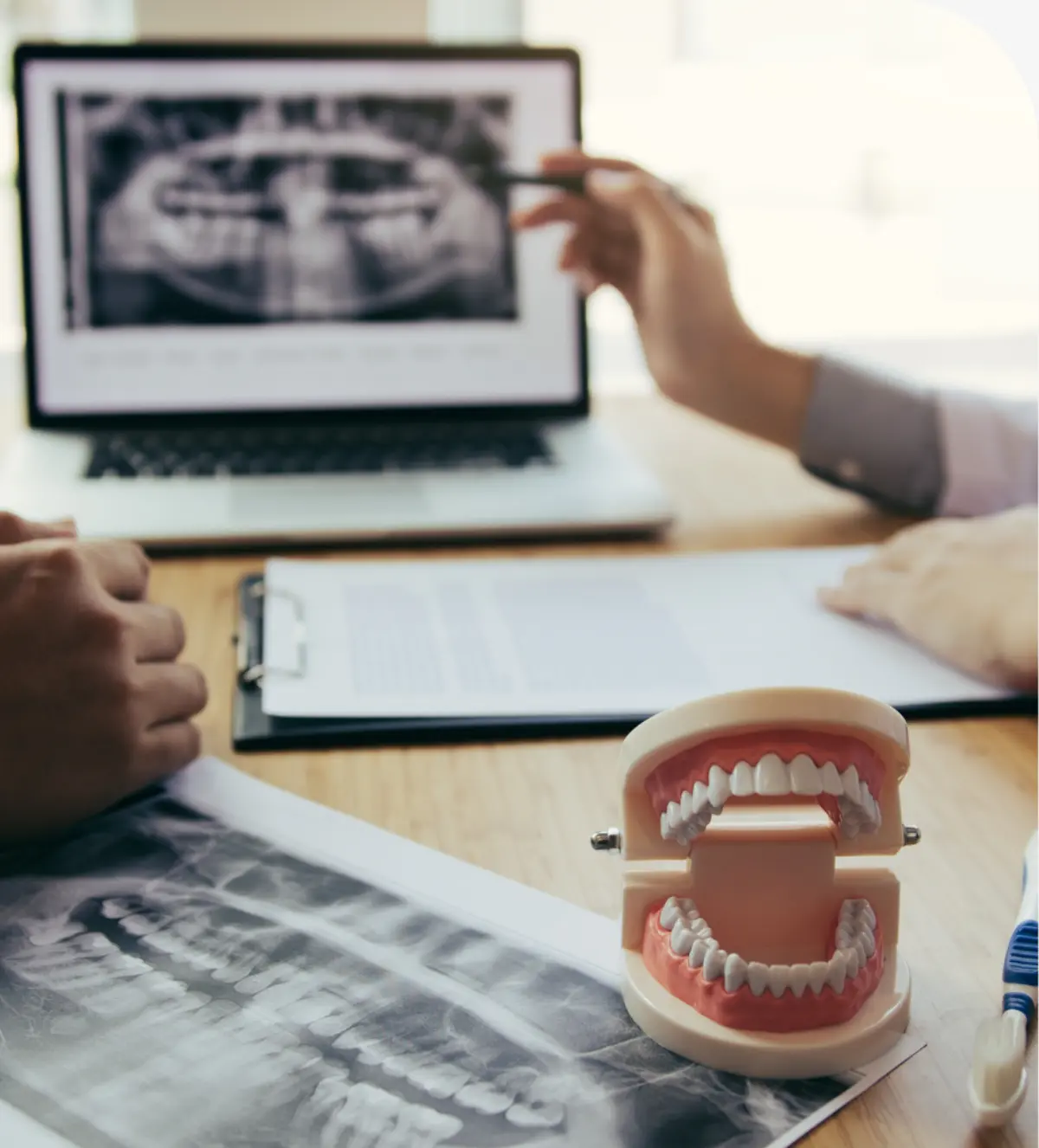
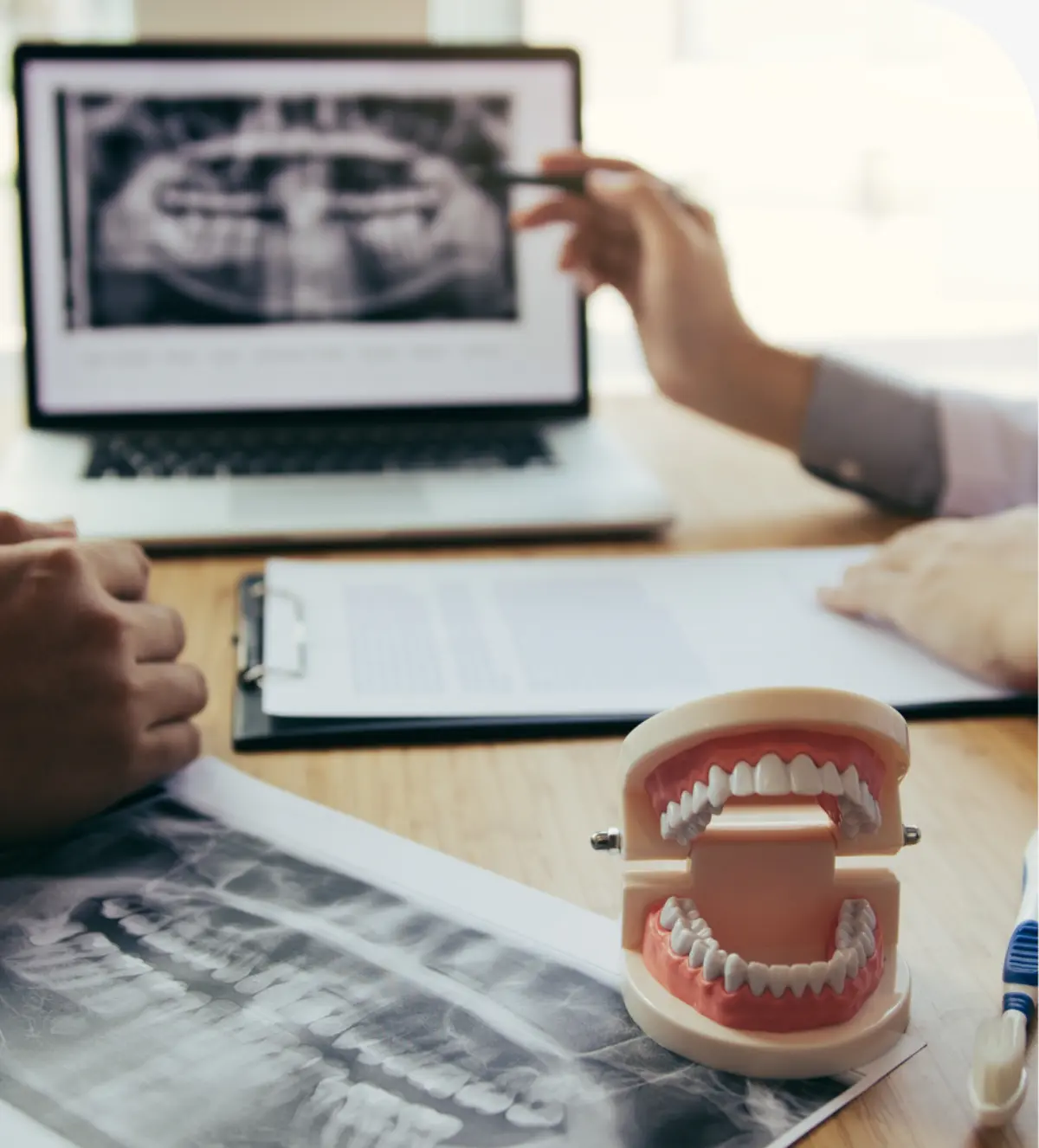
Digital dental radiography replaces traditional film with electronic sensors that capture images instantly. The images appear on a chairside monitor, allowing the dental team to zoom in, adjust contrast, and compare views over time. These pictures help identify cavities between teeth, infection at the root tip, bone loss from gum disease, impacted teeth, and anatomical variations that affect treatment planning.
Common Image Types
- Bitewings show the upper and lower back teeth together to check for decay and detect early bone changes.
- Periapical images focus on a single tooth from crown to root to assess infection, cracks, or root issues.
- Panoramic images capture the entire jaw to review wisdom teeth, jaw joints, and overall bone patterns.
- Occlusal images show larger areas of the mouth and can help locate extra or impacted teeth.
- 3D cone beam scans may be used in select cases for implants or complex concerns, when more detail is needed.
Benefits of Digital X-Rays
- Early detection of problems before they cause pain or require complex treatment.
- Lower radiation dose compared with traditional film, often up to 80–90% less.
- Immediate images that support same-visit decisions and clearer communication.
- Enhanced image quality with tools to zoom and adjust contrast for accuracy.
- Secure storage and easy sharing with specialists when coordination is needed.
How Digital X-Rays Work
Digital sensors or a small phosphor plate are placed gently in the mouth. When the device is activated, the sensor captures the image in a fraction of a second. Software processes the image and displays it immediately. For panoramic views, you will stand or sit while the machine moves around your head to record a broad image of your jaws.
Safety And Radiation
Dental X-rays use a very small dose of radiation. Digital systems reduce exposure further when compared with film. Lead aprons and, when appropriate, a thyroid collar provide added protection. For perspective, a set of bitewings is roughly comparable to a few days of natural background radiation from everyday life. The decision to take images is based on your health history, symptoms, and risk for dental disease.
What To Expect At Your Visit
Most appointments begin with a review of your health history. You may be asked to remove glasses or metal accessories. A team member places the sensor, guides you on how to bite, and steps aside briefly while the image is taken. You may feel light pressure from the sensor; this lasts only a moment. If you have a strong gag reflex, adjustments in positioning, smaller sensors, or alternative views can help you stay comfortable. Images are reviewed with you on-screen so you can see what they show and understand next steps.
When X-Rays Are Recommended
Frequency is individualized. New patients often receive a baseline set. Those with a low risk of decay may need bitewings about once every one to two years, while higher-risk patients may benefit from more frequent checks. Panoramic or periapical images are taken as needed for symptoms, growth and development, wisdom teeth, root concerns, or before treatments like implants or root canal therapy.
Before And After Your Images
- Before: Share your medical history and any recent imaging from other providers.
- During: Expect quick, comfortable positioning and clear guidance from the team.
- After: Review findings together and discuss whether any treatment or monitoring is advised.
Frequently Asked Questions About Digital X-Rays
Schedule Your Appointment
Welcoming New Patients
Need a checkup or treatment? Our team is ready to help you feel comfortable, informed, and cared for today.
Contact our Roanoke dentist and team today to reserve your visit and experience patient-focused care designed around your needs.